

 Made with Levo





Understanding The 25-Hydroxy Vitamin D Test
Vitamin D is a crucial nutrient that plays a vital role in maintaining overall health, particularly bone strength and immune function. Although commonly referred to as a vitamin, Vitamin D acts more like a hormone in the body, regulating the absorption of calcium and phosphate—two minerals essential for building and maintaining healthy bones.
The most accurate way to measure how much vitamin D is present in your body is through the 25-hydroxy vitamin D test. This test measures the level of 25-hydroxyvitamin D, the primary storage form of vitamin D, circulating in your blood.
Why is the Vitamin D Test Performed?
While routine vitamin D testing is not recommended for everyone, healthcare providers often order this test for individuals who are at high risk for deficiency or who have symptoms suggesting low levels. A deficiency in Vitamin D can lead to bone and muscle issues, and in severe cases, conditions like rickets in children and osteomalacia (soft bones) or osteoporosis (low bone density) in adults.
Your provider may order a Vitamin D test if you:
Have symptoms of deficiency: These can include bone pain, muscle weakness or aches, or fatigue.
Have a medical condition related to deficiency: This includes osteomalacia, osteopenia, osteoporosis, or chronic conditions that affect nutrient absorption, such as Crohn’s disease, celiac disease, or ulcerative colitis.
Are over the age of 65: Both skin production and gut absorption of vitamin D decrease as we age.
Have limited sun exposure: This includes those who consistently use high-SPF sunscreen, live at high latitudes, or have darkly pigmented skin, as these factors limit the body's ability to naturally produce vitamin D from sunlight.
Are obese or have had weight-loss surgery: These factors can impair vitamin D absorption and utilization.
Are taking certain medications: Some drugs, such as steroids, laxatives, or cholesterol-lowering medications, can affect vitamin D metabolism or absorption.
Need monitoring: The test may be used to monitor treatment effectiveness if you are taking high-dose supplements, or to monitor kidney problems or abnormal calcium levels.
It is also important to test levels if you are experiencing symptoms of hypervitaminosis D (very high vitamin D levels), which is usually caused by taking too many supplements and can lead to symptoms like nausea, vomiting, confusion, excessive thirst, and potential kidney damage.
How is the Test Performed?
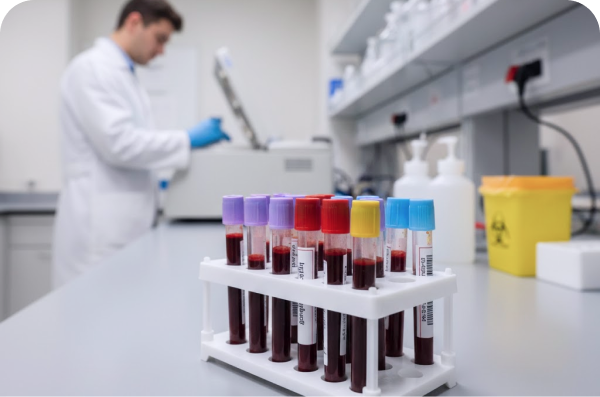
The vitamin D test is a simple blood test. A health care professional will take a blood sample (venipuncture), usually from a vein on the inside of your elbow or the back of your hand. A small needle is inserted into the vein, and the blood is collected into a vial. You may feel a slight sting when the needle goes in or out.
Generally, no special preparation is required before the test. However, it is essential to inform your healthcare provider about all the medicines, vitamins, and supplements you are taking, as they may influence your test results. Never stop taking any prescribed medication unless directed by your doctor.
Understanding Your Results
Your test results are typically measured in nanograms per milliliter or nanomoles per liter and reflect your total 25-hydroxy vitamin D levels. This total includes both Vitamin D2 (from fortified foods and plant supplements) and Vitamin D3 (made by the skin in response to sunlight or taken in animal-based supplements). The total level is what matters most for bone and general health.
Test results are often categorized as follows:
Deficient: Very low levels, which are likely to severely affect your bones and general health (often considered below 20 or 50, according to many experts.
Insufficient: Low levels that may weaken your bones and affect your health, even if you are asymptomatic (often defined as 21–29 or $51$–$74\ \text{nmol/L}$).
Sufficient/Optimal: Levels that are generally enough for good bone and general health for most people. Many experts recommend levels between $20$ and $40\ \text{ng/mL}$ ($60$ to $100\ \text{nmol/L}$), though some recommend higher ranges, such as $30$ to $50\ \text{ng/mL}$ ($75$ to $125\ \text{nmol/L}$).
Toxic/Possible Toxicity: Very high vitamin D levels that can cause health problems.
If your levels are low, your provider will discuss increasing your intake through dietary changes or supplements. If your levels are severely low, a prescription-strength dose of vitamin D may be necessary.
Sources of Vitamin D
Vitamin D can be acquired in three main ways:
Sunlight: The body naturally synthesizes Vitamin D when bare skin is exposed to UVB rays from the sun. Factors like latitude, time of day, season, and sunscreen use affect the amount produced.
Diet: Only a few foods naturally contain Vitamin D, such as fatty fish (salmon, tuna, mackerel), egg yolks, beef liver, and fish liver oils.
Fortified Foods and Supplements: Since obtaining sufficient vitamin D from non-fortified food and sunlight can be challenging, many products are fortified (including milk, breakfast cereals, and orange juice). Vitamin D supplements are widely available, usually in the form of D2 or D3, though D3 is generally shown to be more effective at raising blood levels.
If you are concerned about your vitamin D status or if you have risk factors for deficiency, consulting with your healthcare provider for testing and guidance on appropriate supplementation is the best course of action to ensure your levels remain in a healthy range.
Daily Requirement of Vitamin D
The amount of Vitamin D needed daily depends on your age. Average daily recommended amounts from the Food and Nutrition Board for different ages are listed below in International Units (IU):
Birth to Life Stage Recommended Amount
Birth to 12 Months 400 IU
Children 1-13 years 600 IU
Teens 14-18 years 600 IU
Adults 19-70 years 600 IU
Adults 71 years and older 800 IU
Pregnant and breastfeeding women 600 IU
Frequently Asked Questions (FAQs)
1. What is the Vitamin D Advanced (D2, D3 & D Total) test, and why is it important?
The Vitamin D Advanced (D2, D3 & D Total) test measures your vitamin D levels, which are crucial for bone health, immune function, and overall well-being. It helps find vitamin D deficiency, which can cause bone pain, joint and muscle aches, tiredness, muscle twitching, and weakness. If not treated, it can lead to weak bones, fractures, or osteoporosis.
2. What can cause vitamin D deficiency?
The primary causes of vitamin D deficiency are insufficient sunlight exposure or a vitamin D-deficient diet.
3. What is the right time to get the Vitamin D Advanced (D2, D3 & D Total) test done?
This test can be done at any time of the day. However, one should stop taking vitamin D supplements before giving the test sample to get accurate results.
4. Are there any risks associated with this test?
No, the Vitamin D Advanced (D2, D3 & D Total) test is generally safe with minimal risks. You might feel a little discomfort when the blood sample is taken, but serious problems are very rare.
5. Can vitamin D deficiency be corrected through diet alone?
Though some food items, such as green vegetables, mushrooms, egg yolks, and fatty fish, contain vitamin D, supplements are often necessary to reach adequate levels.