

 Made with Levo




Understanding Menopause Profile
A Menopause Profile is a comprehensive blood test panel designed to determine a woman's hormonal status and confirm if she is approaching or has entered menopause. Menopause is defined as the cessation of menstrual cycles for 12 consecutive months, typically occurring between the ages of 45 and 55. However, the transition phase, known as perimenopause, can last for several years with fluctuating symptoms. This profile is essential for women experiencing irregular periods, hot flashes, night sweats, mood swings, vaginal dryness, or sleep disturbances. It helps distinguish menopause from other conditions with similar symptoms, such as thyroid disorders or pituitary issues, and aids doctors in deciding if Hormone Replacement Therapy (HRT) or other management strategies are necessary.
Components Measured
This profile analyzes the key reproductive hormones that shift significantly during the menopausal transition:
Follicle Stimulating Hormone (FSH): Produced by the pituitary gland to stimulate the ovaries. As ovaries age and egg production declines, the body works harder to stimulate them, causing FSH levels to rise sharply. This is the primary marker for menopause.
Luteinizing Hormone (LH): Works alongside FSH to regulate the menstrual cycle and ovulation. Like FSH, LH levels typically remain consistently high after menopause.
Estradiol (E2): The most potent form of Estrogen. It is produced by the ovarian follicles. During menopause, as follicles deplete, Estradiol levels drop significantly. Low levels are responsible for many menopausal symptoms like bone density loss and hot flashes.
Thyroid Stimulating Hormone (TSH): Included to rule out thyroid dysfunction. Hypothyroidism (underactive thyroid) or Hyperthyroidism (overactive thyroid) can cause symptoms—such as fatigue, weight changes, and irregular periods—that mimic menopause.
(Optional but common additions: Prolactin to rule out pituitary tumors, and Anti-Mullerian Hormone (AMH) to assess remaining egg reserve).
Preparation
Proper timing is crucial for accurate interpretation, especially if the patient is still having periods (perimenopause).
Timing: If the patient still has menstrual cycles (even if irregular), the test is ideally done on Day 2 or Day 3 of the cycle (where Day 1 is the first day of full bleeding). If the patient has had no periods for several months, the test can be taken on any day.
Fasting: Generally, no fasting is required for hormonal tests. However, if this profile is combined with other metabolic tests (like sugar or cholesterol), overnight fasting of 10–12 hours may be necessary.
Medications: Patients must inform their doctor if they are taking hormonal contraceptives (birth control pills) or hormone replacement therapy, as these will artificially alter the results and make the test invalid. It is often recommended to stop biotin (Vitamin B7) supplements 48 hours before the test, as high doses can interfere with lab assays.
Procedure
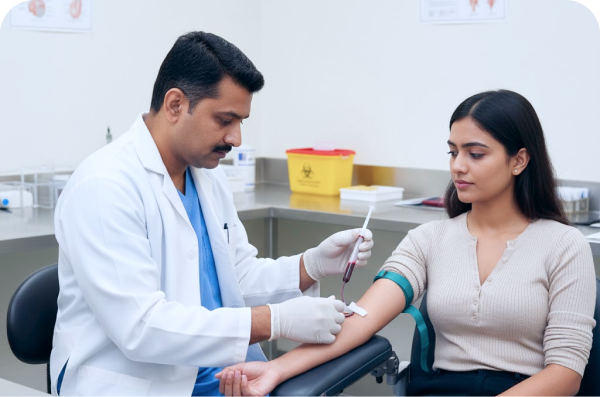
The procedure is a standard venous blood collection:
A tourniquet is tied around the upper arm to make the veins swell.
The skin at the inner elbow is cleaned with an antiseptic wipe.
A sterile needle is inserted into the vein; you may feel a small prick.
Blood is drawn into specific tubes (usually red or gold-topped tubes for serum separation).
The needle is removed, and pressure is applied to stop any bleeding.
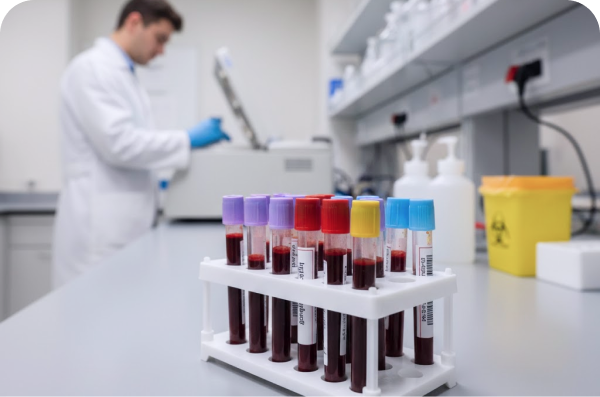
The sample is sent to the laboratory for chemiluminescence or immunoassay analysis.
Risks
The risks are minimal and identical to standard blood tests:
Bruising/Hematoma: A small bruise may form at the puncture site.
Dizziness: Some patients may feel faint at the sight of blood or the needle.
Infection: Very rare if proper sterile techniques are used.
Multiple Punctures: In patients with difficult veins (common in dehydration), the phlebotomist may need more than one attempt to find a vein.
Normal Ranges
Reference ranges vary significantly depending on which stage of life the woman is in. Values are typically measured in mIU/mL (for FSH/LH) and pg/mL (for Estradiol).
Premenopausal (Reproductive Age):
FSH: Typically low (roughly 3–10 mIU/mL), peaking only briefly during ovulation.
LH: Similar low baseline, with a sharp mid-cycle surge.
Estradiol: High and fluctuating (30–400 pg/mL depending on cycle day).
Postmenopausal:
FSH: Consistently high (> 30 mIU/mL is the standard diagnostic cutoff for menopause).
LH: Consistently high (> 20 mIU/mL).
Estradiol: Consistently low (< 30 pg/mL), often undetectable.
Interpretation
A doctor must interpret these results in the context of the patient's age and symptoms.
Confirmed Menopause: Indicated by High FSH and High LH combined with Low Estradiol in a woman who has not had a period for a year.
Perimenopause: Indicated when FSH is elevated but not yet at postmenopausal levels, and Estradiol is fluctuating (sometimes high, sometimes low). Cycles may still be occurring but are irregular.
Premature Ovarian Failure (POF): If menopausal levels (High FSH, Low E2) are found in a woman under age 40, it indicates premature menopause, which requires medical attention for bone and heart health protection.
Normal Thyroid (TSH): If TSH is normal, symptoms are likely due to hormonal shifts. If TSH is abnormal, thyroid treatment may resolve the symptoms without needing menopause management.
Frequently Asked Questions (FAQs)
1. Who should get tested for the Perimenopausal Package?
This health checkup is beneficial for women (between 40-55 years) experiencing symptoms related to hormonal imbalances, such as irregular periods, mood swings, or unexplained weight changes. It helps identify potential health risks and informs personalized care strategies.
2. Do I need to fast before the tests?
Yes, an overnight fasting period of 8 to 12 hours is generally required for reliable test results. It is important to follow your doctor's instructions regarding fasting.
3. What do the test results mean?
The test results provide insights into hormonal levels, metabolic health, and organ function. Your doctor will explain the implications of these results and how they relate to your health.
4. How often should I get this checkup?
Frequency depends on individual health needs, symptoms, and risk factors. Your doctor can advise you on the appropriate schedule based on your specific situation.