







Know More About This Test
FSH is a hormone produced by the pituitary gland that plays a crucial role in regulating reproductive processes in both males and females. In women, it controls ovarian follicle development and menstrual cycles, while in men, it supports sperm production.
Why Is This Test Recommended?
FSH testing is advised for evaluating infertility, menstrual irregularities, delayed or early puberty, and menopausal status. In men, it helps assess testicular function and the causes of low sperm count.
What Do the Results Indicate?
High FSH levels in women may indicate ovarian failure or menopause, while low levels suggest pituitary dysfunction. In men, elevated FSH can point toward primary testicular failure.
How Do I Prepare for the Test?
A simple blood test is performed. In women, the test may be timed with the menstrual cycle for accurate interpretation.
How Is the Test Performed?
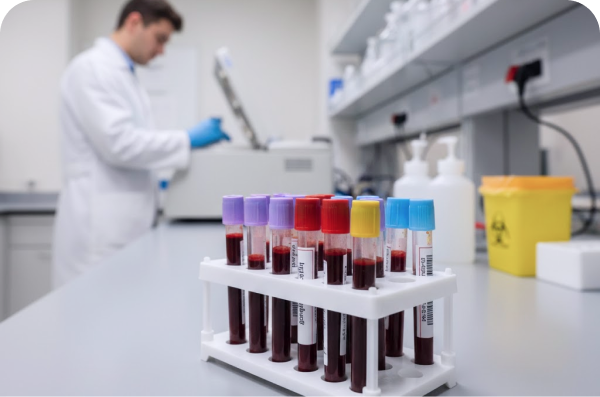
A blood sample is collected from a vein in your arm.
Frequently Asked Questions (FAQs)
Does FSH change with age?
Yes, FSH levels naturally increase with age, particularly in women approaching menopause as ovarian function declines.Is cycle timing important?
Yes, in women; FSH is typically measured on day 2-3 of the menstrual cycle for accurate assessment of ovarian reserve.Can FSH predict menopause?
Yes, persistently elevated FSH levels can indicate approaching or established menopause and declining ovarian function.Is it tested alone?
Often with LH; FSH is frequently tested alongside luteinizing hormone (LH) for comprehensive reproductive hormone evaluation.Can treatment normalize levels?
Sometimes; while underlying conditions may be treatable, persistently elevated FSH due to ovarian or testicular failure is generally irreversible.