


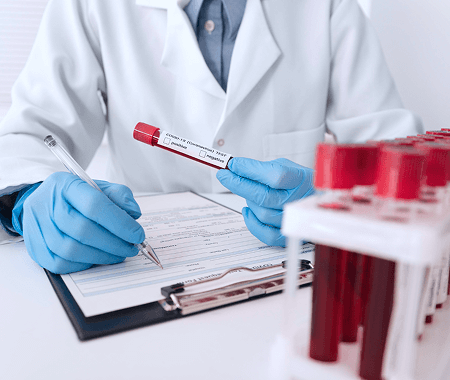




Know More About This Test
The Activated Partial Thromboplastin Time (APTT) test measures the time taken for blood to clot through the intrinsic and common coagulation pathways. It evaluates the function of several clotting factors produced mainly by the liver and is an essential test for assessing bleeding or clotting disorders.
APTT is also widely used to monitor patients receiving heparin therapy and to investigate unexplained bleeding tendencies or recurrent miscarriages.
Why Is This Test Recommended?
A healthcare provider may order an APTT test for several vital clinical reasons:
Monitoring Heparin Therapy: This is the most common use. Patients on "unfractionated heparin" (a blood thinner) require regular APTT checks to ensure their dosage is high enough to prevent clots but low enough to avoid dangerous bleeding.
Pre-Surgical Screening: To ensure a patient can safely undergo surgery without the risk of excessive intra-operative bleeding.
Investigating Unexplained Bleeding: Identifying the cause of frequent nosebleeds, heavy menstrual cycles, or bleeding gums.
Evaluating Easy Bruising: Determining if "black and blue" marks are appearing due to a lack of clotting proteins.
Screening for Genetic Disorders: Detecting deficiencies in factors VIII, IX, and XI, which are associated with conditions like Hemophilia A and B.
Checking for Inhibitors: Identifying the presence of "Lupus Anticoagulant" or other antibodies that interfere with the body's natural clotting process.
Symptoms or Conditions That May Require an APTT Test
You may be advised to undergo this test if you experience symptoms related to abnormal hemostasis:
Prolonged Bleeding from Minor Cuts: A simple scratch or shaving nick that oozes for an unusually long time.
Recurrent Nosebleeds (Epistaxis): Spontaneous nosebleeds that are difficult to stop with standard pressure.
Heavy or Prolonged Menstrual Bleeding: Periods lasting more than a week or involving very large clots.
Easy Bruising: Developing large bruises from very minor bumps or even without known injury.
Swollen, Painful Joints: This can be a sign of internal bleeding into the joint spaces (hemarthrosis), common in undiagnosed clotting factor deficiencies.
Blood in Urine or Stool: Unexplained internal bleeding that appears in bodily waste.
How Is the Test Performed and Prepared For?
A venous blood sample is collected. No fasting is required. Patients should inform the doctor about blood-thinning medications.
What Does the APTT Test Measure?
The test specifically monitors the performance of the following clotting factors:
Factor XII (Hageman factor)
Factor XI
Factor IX (Christmas factor)
Factor VIII
Common Pathway Factors: Factors X, V, II (Prothrombin), and I (Fibrinogen).
By observing how long it takes for these factors to produce a fibrin web, the lab determines your "clotting speed."
What Do the Results Mean?
Results are reported in seconds. While ranges depend on the specific chemical reagents used by a laboratory, general benchmarks are:
Normal Range: Typically between 25 to 35 seconds. This suggests that the intrinsic and common pathways are functioning correctly.
Prolonged APTT (High): This means the blood is taking longer than normal to clot. This could be due to:
Heparin use.
Clotting factor deficiencies (like Hemophilia).
Liver disease (the liver makes most clotting factors).
Presence of "Lupus Anticoagulant" antibodies.
Vitamin K deficiency (though this usually affects the PT test more).
Shortened APTT (Low): This is less common but may occur during an acute inflammatory response or immediately after an injury when the body is in a "hyper-clotting" state.
Lifestyle Tips to Support Healthy Clotting
Consistent Vitamin K Intake: If you are on certain blood thinners, keep your intake of green leafy vegetables (spinach, kale) consistent. Drastic changes can flip your clotting times.
Stay Active: Regular movement prevents blood from pooling in the legs, which reduces the risk of clots that might require blood-thinning medication.
Alcohol in Moderation: Excessive alcohol can damage the liver, which is the "factory" for your clotting proteins.
Dental Safety: If you have a known prolonged APTT, use a soft toothbrush and inform your dentist before any procedure to prevent excessive gum bleeding.
Home Safety: Reduce tripping hazards in your home to prevent falls that could lead to internal bruising or joint bleeds.
Frequently Asked Questions (FAQs)
Is APTT used for clotting or bleeding?
Both; APTT assesses clotting function to identify bleeding disorders and also helps evaluate thrombotic risk in certain conditions.Does it monitor heparin therapy?
Yes, APTT is the standard test for monitoring unfractionated heparin therapy, ensuring the dosage is therapeutic and safe.Can pregnancy affect results?
Mildly; pregnancy can cause slight changes in coagulation factors, though significant abnormalities still require investigation.Is fasting needed?
No, fasting is not required for APTT testing as it measures clotting function, not metabolic parameters.Is repeat testing common?
Yes, repeat testing is common for monitoring anticoagulant therapy, tracking treatment response, or confirming initial abnormal results.